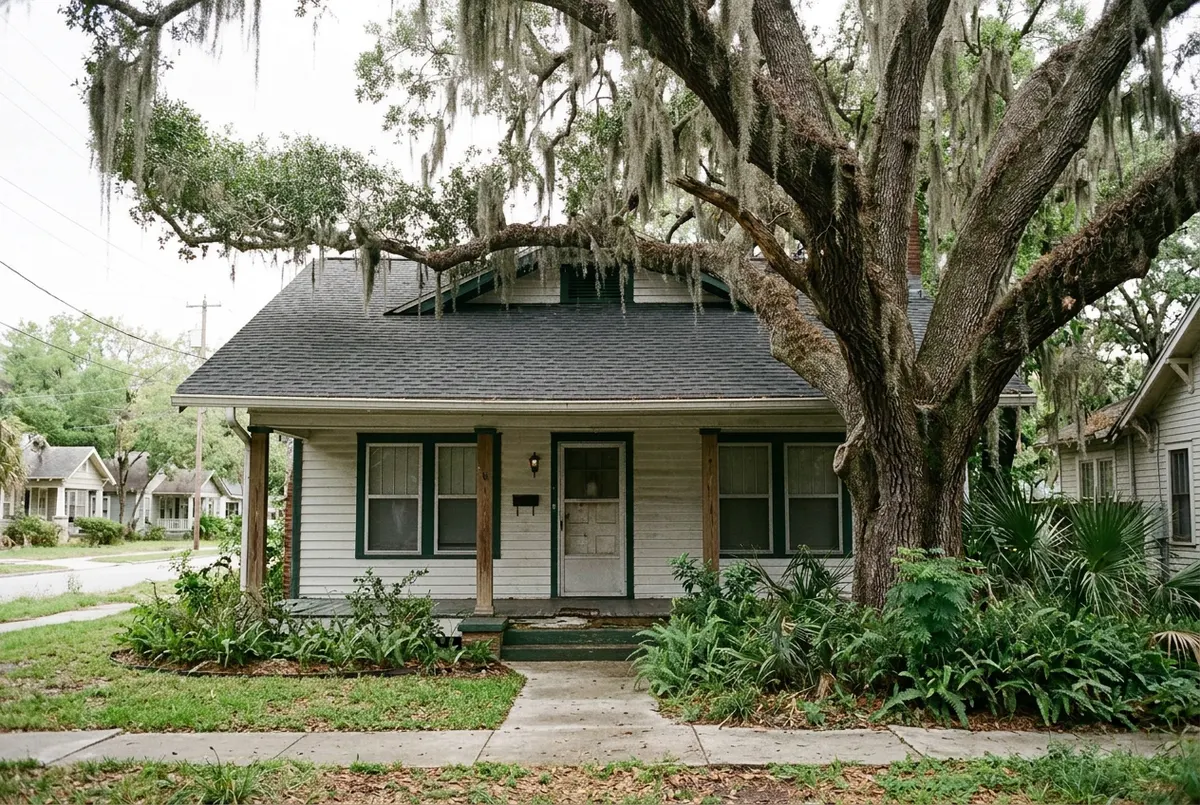
If you have a live oak in your yard, you have one of the toughest, longest-lived trees in Florida. Live oaks have dense, strong wood, a wide spreading crown, and a deep, far-reaching root system. They're also among the trees that hold up best in hurricanes. But size works against them too: a mature live oak can spread wider than your house, and a bad pruning job or a damaged root system can undo decades of growth.
I've climbed more Orlando live oaks than I can count. Here's what I tell homeowners who want to keep theirs healthy.
Prune for Structure, Not Shape
Good live oak pruning follows the ANSI A300 standards that professional arborists use. In practice, that means:
- Removing dead, broken, and crossing branches
- Reducing the length of long, heavy limbs that reach over roofs or driveways
- Raising the canopy for clearance over the house, street, and sidewalk
- Making clean cuts just outside the branch collar, never flush with the trunk
- Removing no more live foliage than the tree needs, usually well under a quarter of the canopy in one season
Young live oaks benefit most from structural pruning: picking one strong central leader and spacing out the main limbs so they grow into a sound framework. A few hours of work on a ten-year-old oak can prevent a split trunk fifty years later.
When to Prune
Dead wood and hazardous limbs can come out any time of year. For heavier structural pruning, many arborists prefer late winter, before the spring flush of new leaves. In practice, the more important timing is getting the work done before hurricane season instead of after a storm has already found the weak limbs.
Two Pruning Mistakes to Avoid
Topping means cutting the main limbs back to stubs to shrink the tree. It starves the tree, invites decay at every cut, and produces a flush of weakly attached shoots that break easily in wind. A topped oak is more dangerous, not less.
Lion-tailing is the opposite mistake: stripping out all the inner branches and leaving foliage only at the ends of long limbs. It looks tidy from the ground, but it moves the weight to the tips and removes the small branches that damp movement in wind. Lion-tailed limbs are far more likely to snap in a storm.
If someone offers to 'clean out' your oak by stripping the interior, ask them to stop. A healthy canopy should have foliage spread along the whole length of each limb.
Protect the Root Zone
Most of a live oak's roots are in the top couple of feet of soil and spread well past the edge of the canopy. Damage to those roots often doesn't show up in the crown for several years, by which time it's hard to reverse. Protect them by:
- Keeping vehicles, equipment, and parked trailers off the root zone
- Avoiding trenching for irrigation, utilities, or fences close to the trunk
- Not piling soil or fill against the trunk or over the roots, which smothers them
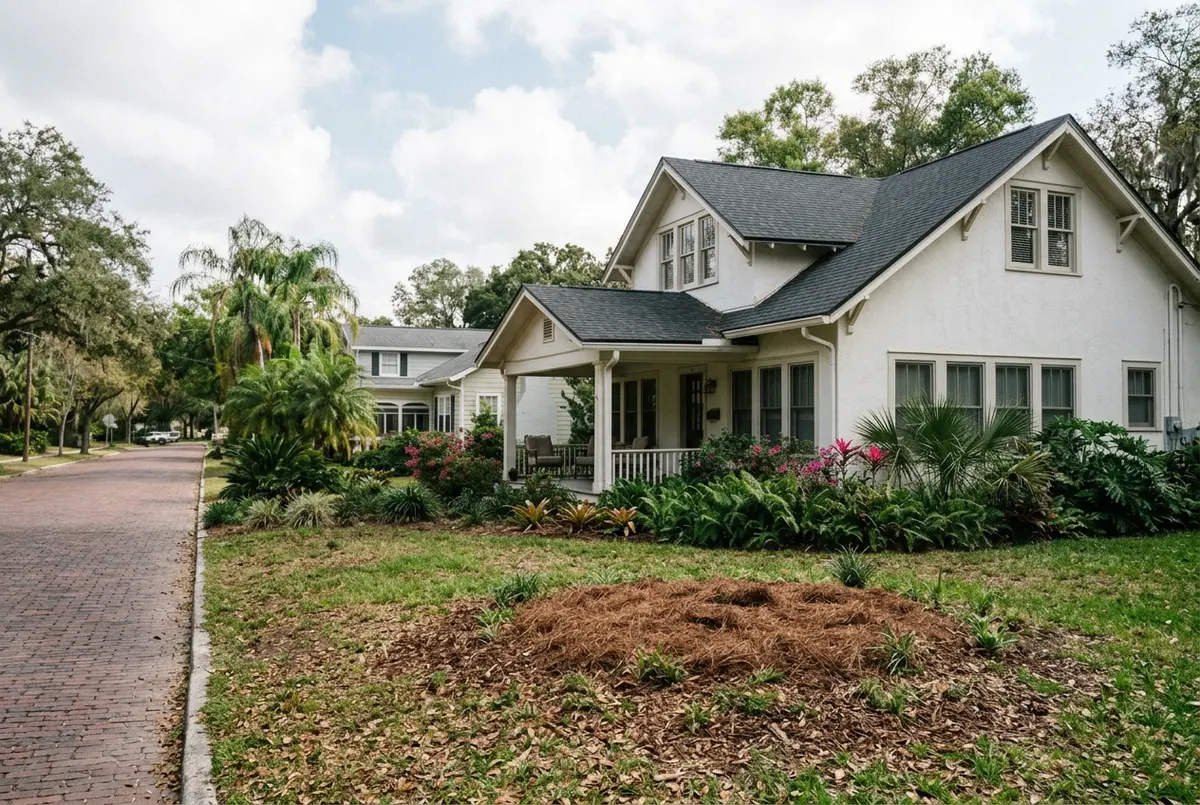
- Using mulch, two to three inches deep and pulled back from the trunk, instead of grass right up to the base
If you're planning construction, a pool, or a new driveway near a big oak, talk to an arborist before the work starts. A tree protection plan is much cheaper than removing a declining oak a few years later.
Spanish Moss Is Not the Problem
Spanish moss isn't a moss and it isn't a parasite. It's an epiphyte, a plant that uses the tree for support and gets its water and nutrients from the air and rain. It doesn't feed on the oak. Heavy moss can add some weight and shade interior leaves, and it tends to collect on trees that are already thinning, which is why people sometimes blame it for decline. Light thinning during pruning is fine, but stripping it out isn't necessary for the tree's health. Ball moss works the same way.
When to Call an Arborist
- Large dead limbs, or dieback spreading from the top of the crown
- Cracks, cavities, or mushrooms at the base or in major unions
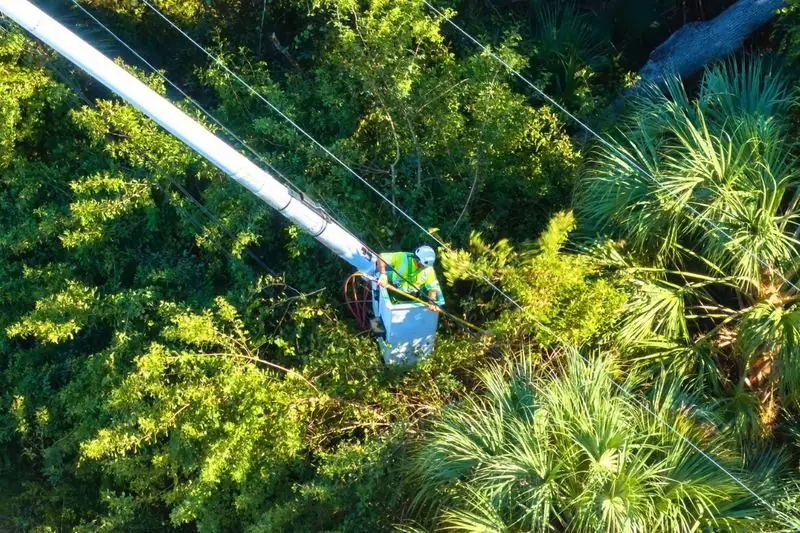
- A limb rubbing your roof or growing into power lines
- Construction planned anywhere near the tree
- Any time you're not sure whether a limb is safe
Our certified arborists offer free on-site assessments. We'll look at your oak from the roots up, tell you what it needs, and just as often, tell you what it doesn't.